Everything Salesforce needs -
native apps or bespoke services.
Every app started as a gap we hit on a real implementation. The team that built them does the consulting too.
Products
Native apps for the everyday gaps: documents, e-signature, files, photos, charts and forms. Built and architected by the team that has routinely solved these issues for customers.


Services
Implementation, migration and custom development, architected by a Salesforce Certified Technical Architect. The same team that builds our apps takes on the work an app cannot cover.
The apps.
Each app installs from AppExchange and comes with its own guides, release notes and support.


When you need people, not just apps.
Non-Profit
NPSP · Nonprofit Cloud · Donor stewardship
App Development
AppExchange · Managed packages · Security review
Education
Education Cloud · Recruitment · Advancement
Financial Services
Financial Services Cloud · Compliance · Client engagement
Telecommunications & Tech
Communications Cloud · SaaS & software · Order management
Retail & Manufacturing
Manufacturing Cloud · B2B commerce · Field operations
Health & Life Sciences
Sales & Service Cloud · Patient journeys · Compliance
Energy & Utilities
Energy & Utilities Cloud · Field service · Customer operations
Insights from the team.
E-Signature in Sliick Docs: The Story, the Law, and the Tick
"How is this legal?" is the question I asked myself after my own solicitor sent me a document to sign with no digital certificate attached at all, on a perfectly reputable platform. Turns out that's how most e-signature actually works, and that realisation is the reason Sliick Docs' native e-signature is free. Six months and a lot of weekends later, there's a second half to the story: the cryptographic, Adobe-trusted green tick people keep asking for, which is real infrastructure with real running costs, and is exactly why it's a conversation rather than a checkbox.
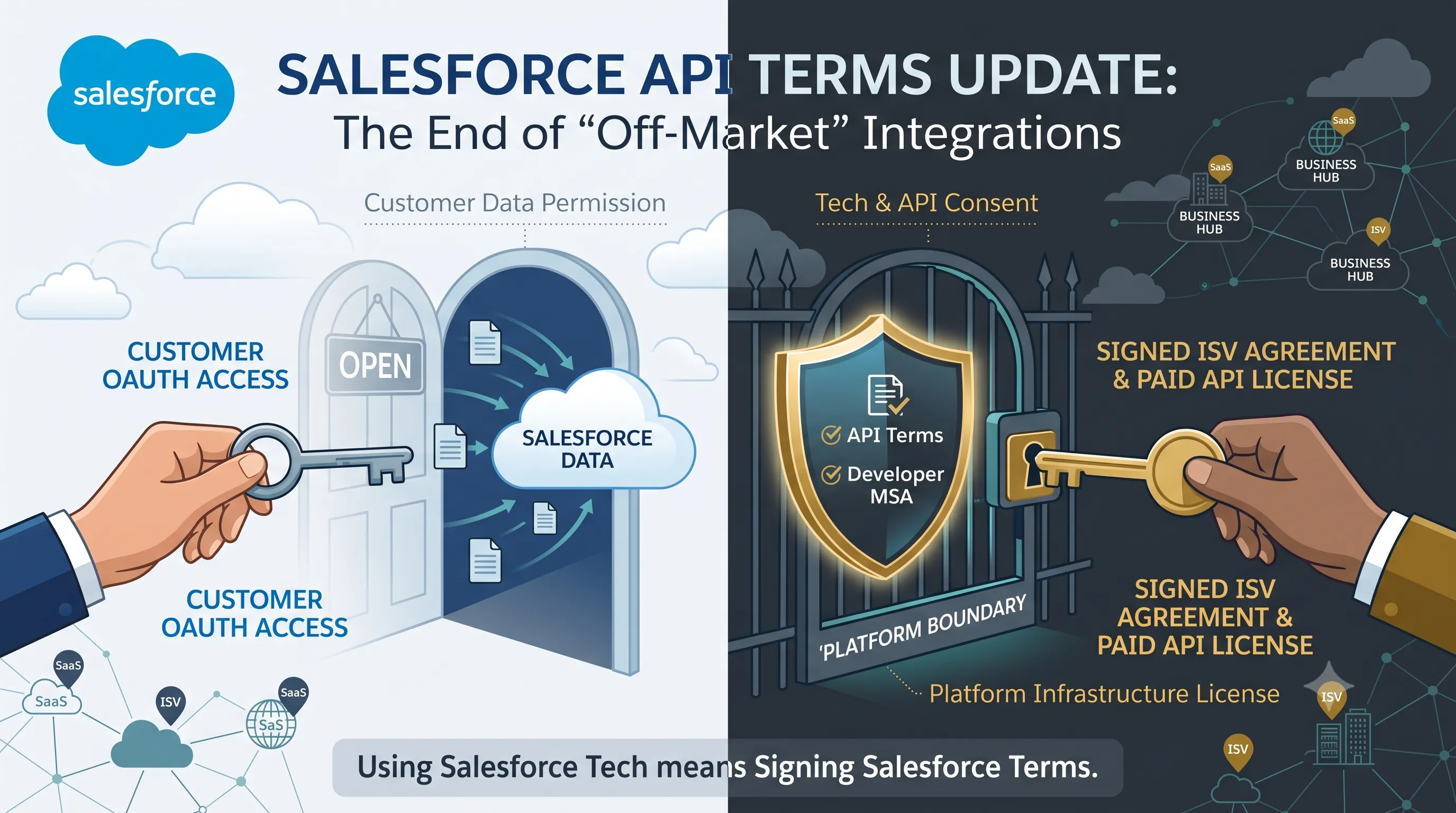
Important Updates to Legal Terms for Salesforce APIs: How This Impacts Your SaaS Business
For years, SaaS vendors have connected directly to Salesforce orgs via OAuth without ever signing a partner agreement, reasoning that customer consent was enough. Salesforce's updated API Terms and Developer MSA make clear that was never true, and now spell out exactly who must enrol in the AppExchange Partner Program to keep their API access.
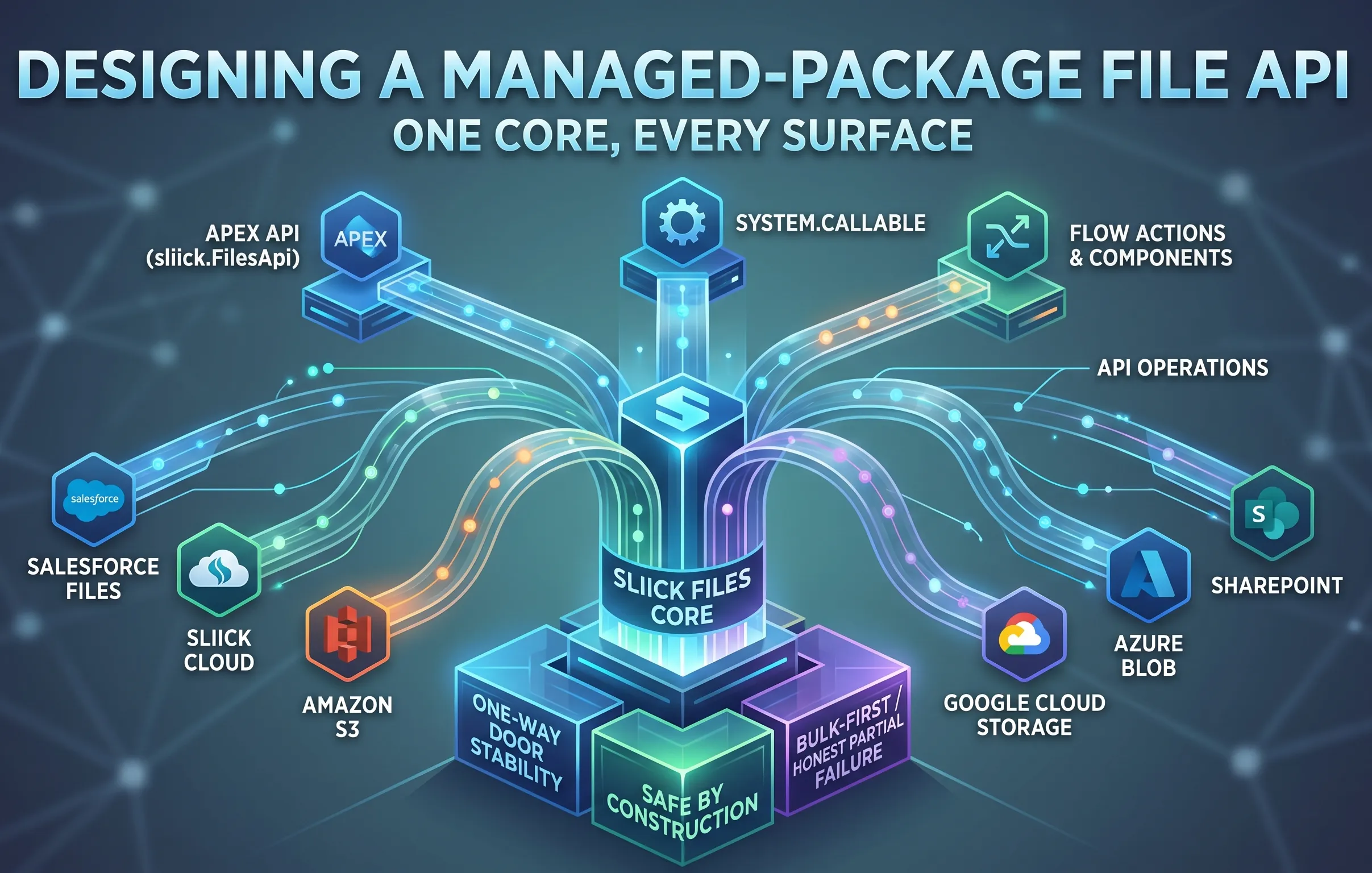
Designing a Managed-Package File API: One Core, Every Surface
Sliick Files exposes file operations to Apex, a dynamic Callable surface, and Flow. This is the architecture walkthrough: the design goals a managed-package public API has to satisfy, the alternatives we weighed against them, and why a single verified core behind thin adapters is the design that wins.