Practical writing for the people who run Salesforce - on generating documents, staying in control of your data, and getting more out of the platform you already pay for.
Sliick Forms has gone from v0.3 to v0.6. A form can now be published to its own public address without an Experience Cloud site, a long form saves and resumes across devices, multi-object forms get a clear object model, the Admin Dashboard and Sliick Responses are redesigned around delivery and answers, and theming becomes a guided, live-previewed panel. Still free on the AppExchange, still collecting feedback for 1.0.
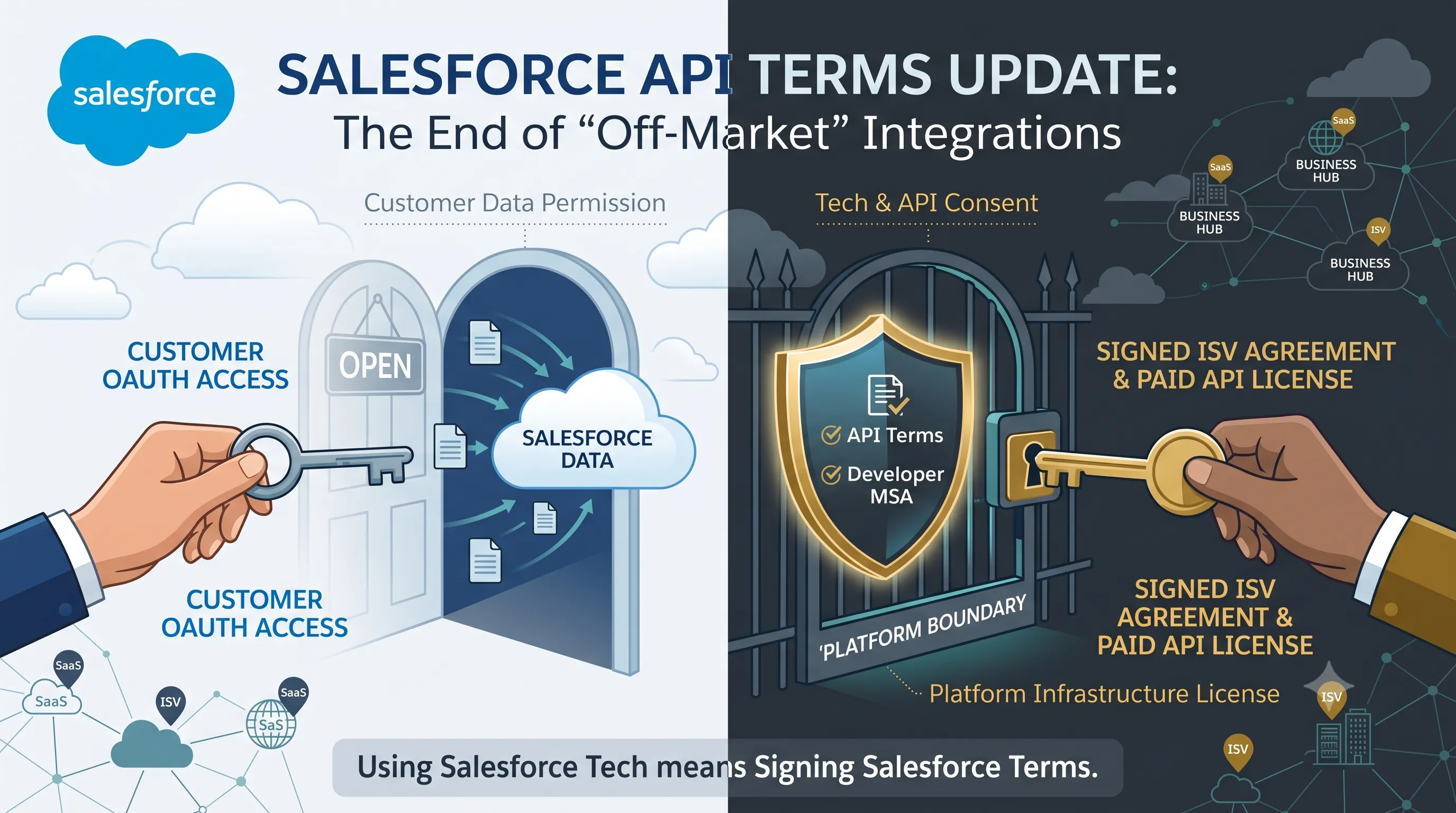
For years, SaaS vendors have connected directly to Salesforce orgs via OAuth without ever signing a partner agreement, reasoning that customer consent was enough. Salesforce's updated API Terms and Developer MSA make clear that was never true, and now spell out exactly who must enrol in the AppExchange Partner Program to keep their API access.
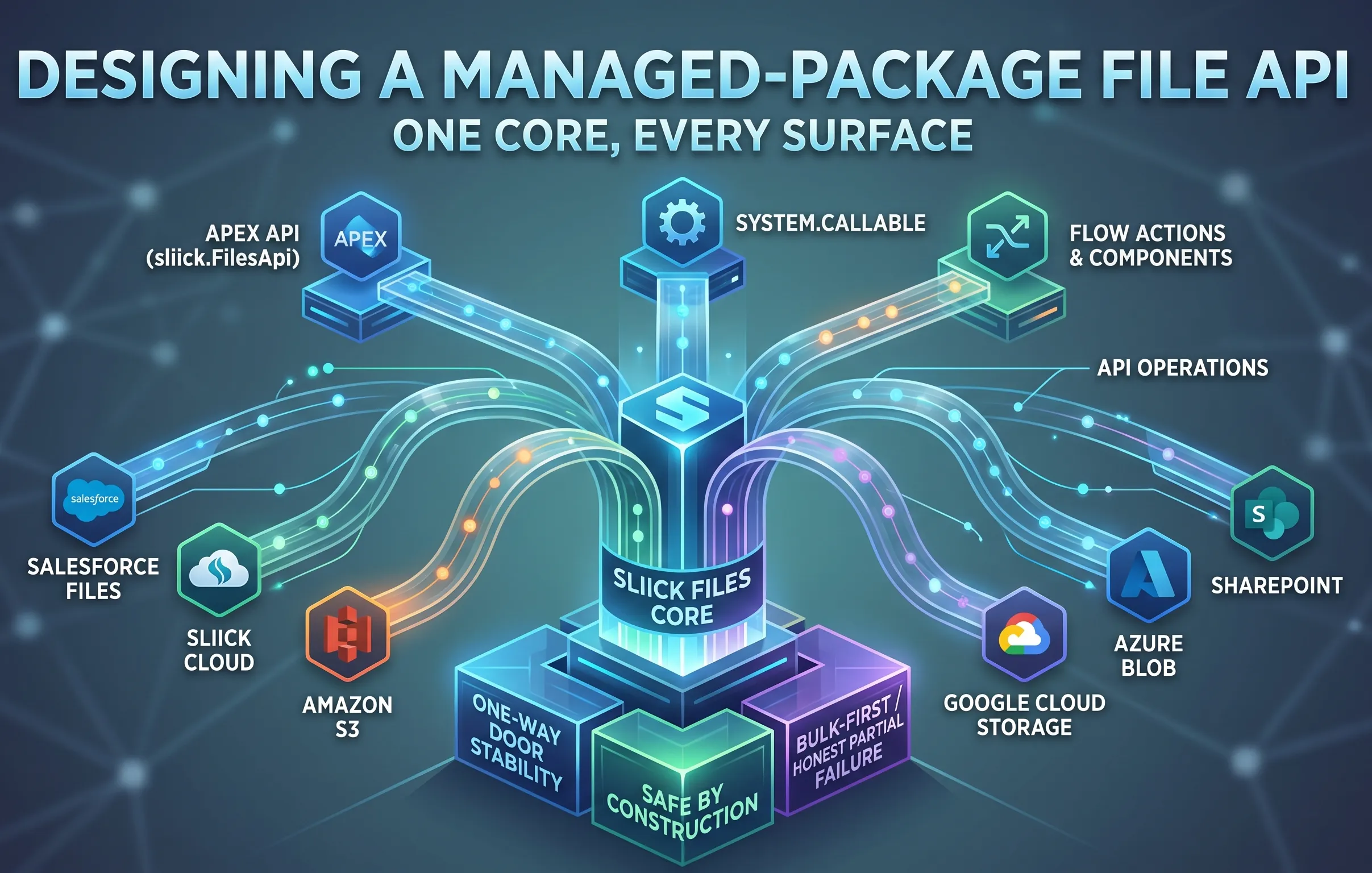
Sliick Files exposes file operations to Apex, a dynamic Callable surface, and Flow. This is the architecture walkthrough: the design goals a managed-package public API has to satisfy, the alternatives we weighed against them, and why a single verified core behind thin adapters is the design that wins.
The new @sliick/sfdx-plugin turns Sliick Docs templates into a CI-grade promotion artefact. Install once, authenticate against any org with the standard sf session, and move templates and bundles between sandbox and production the same way you move code.
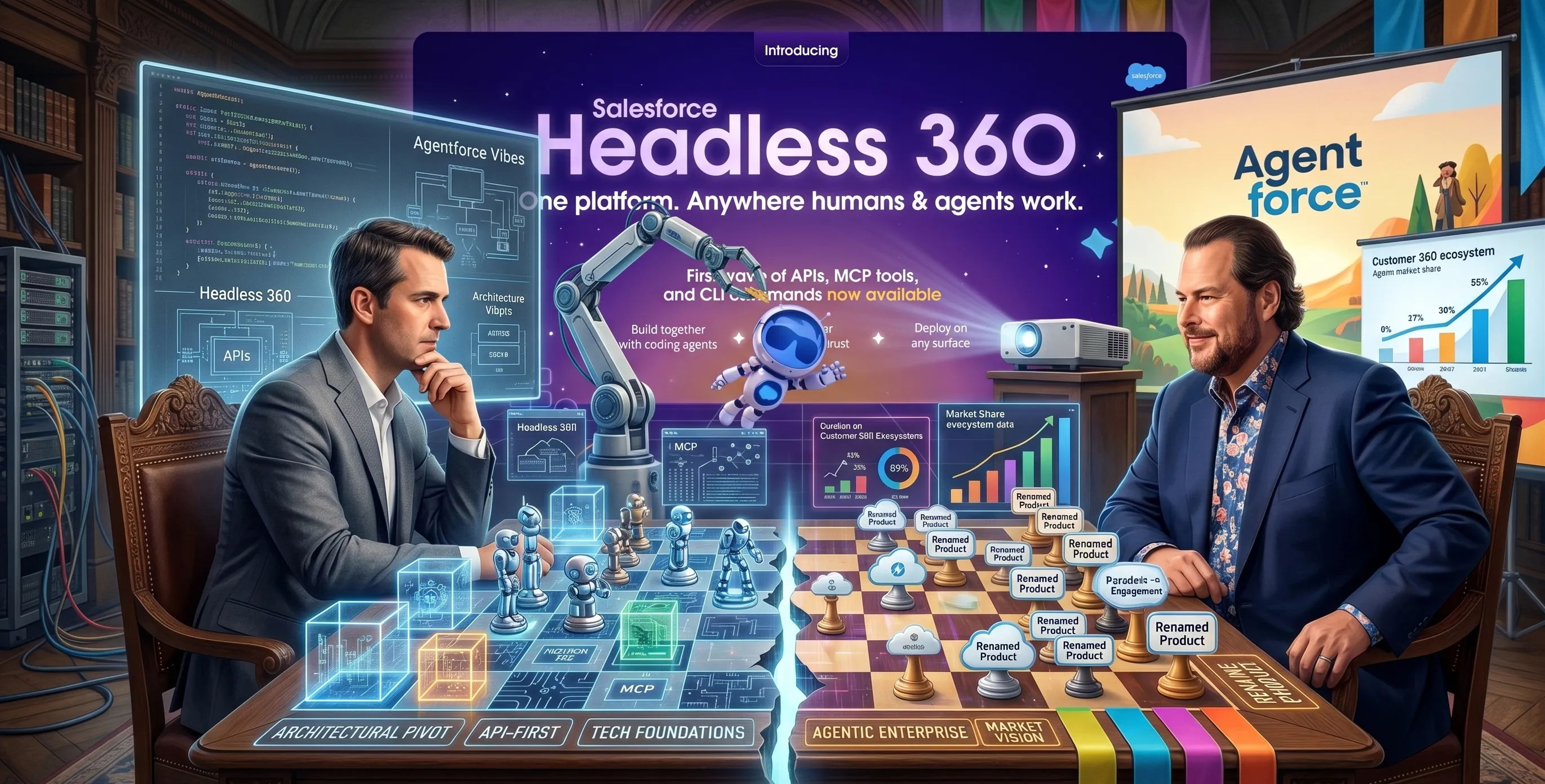
Salesforce's TrailblazerDX 2026 introduced the "Headless 360" initiative, returning to a focus on backend APIs, AI agents, and decoupling the frontend. Here is what it means for architects.
Transforming your organisation into a digital leader requires a mature Salesforce capability. Explore the maturity model and core competencies needed to build a robust Centre of Excellence.
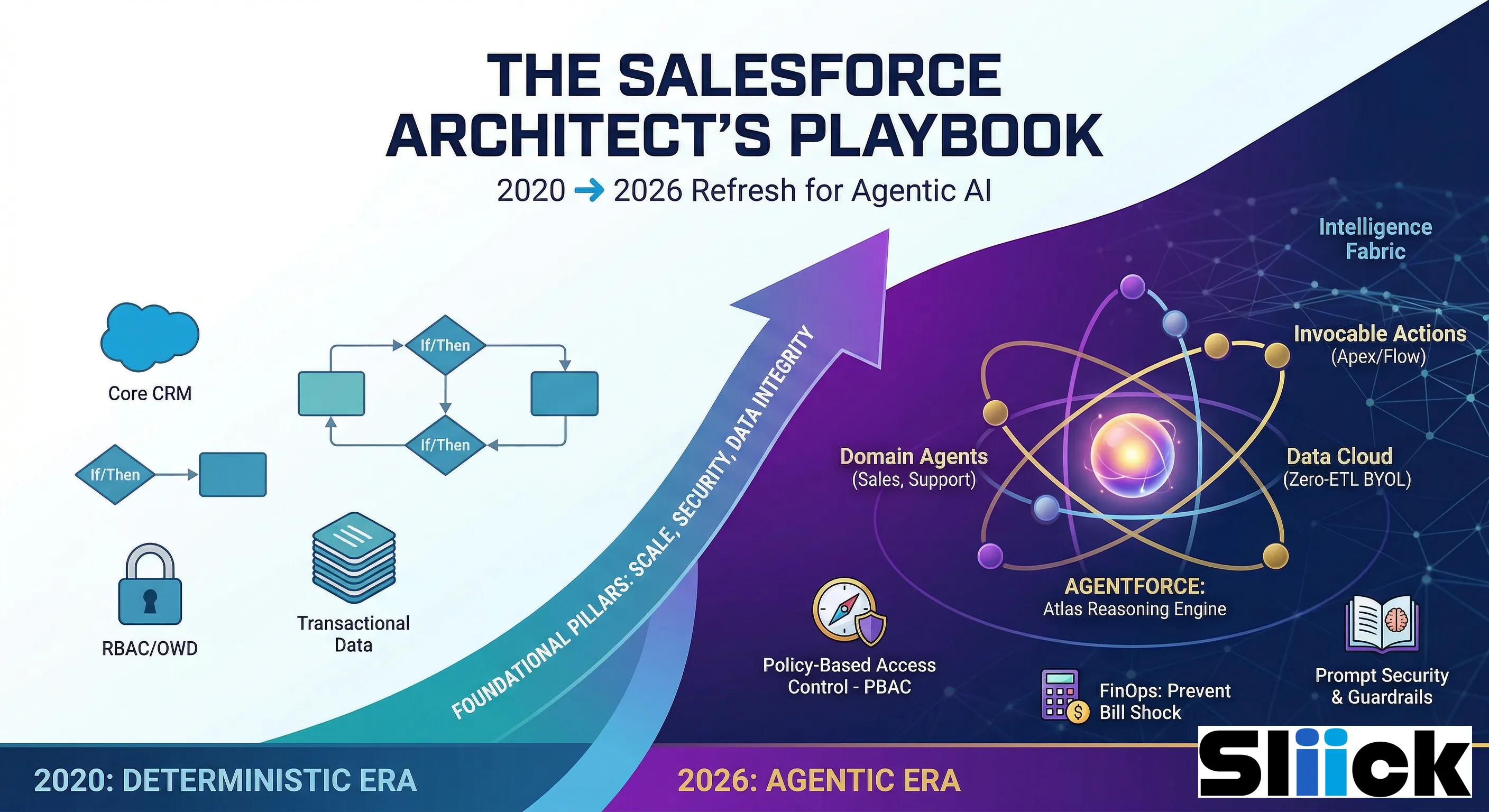
Mastering Salesforce architecture is more than just passing a certification. This comprehensive framework covers agentic orchestration, data intelligence, zero-trust security, and integration strategy for any modern enterprise rollout.
External Client Apps replace Connected Apps for modern OAuth - but packaging them in a 2GP managed package requires careful metadata management. This step-by-step guide covers the four metadata types, .forceignore rules, and how to get global credentials working across subscriber orgs.
As AI matures to generate, refactor, and test high-quality code instantly, the visual abstraction of Salesforce Flow is becoming a bottleneck. Explore why the future of Salesforce automation is AI-assisted Apex.
Delivering a secure, fully documented Salesforce MVP for non-profits during the two-day SFDO Community Sprint by leveraging agentic assisted coding.
The clock is ticking for Salesforce administrators. Starting March 9, 2026, Salesforce is enforcing a major security update that changes how your emails are delivered.
Salesforce is implementing critical certificate infrastructure updates in 2026. From the DigiCert G2 transition to 200-day lifespans, here is what leadership needs to know to maintain connectivity.
In 2026, Code is a commodity. For Melbourne firms, the gap between having Salesforce and winning with it is defined by architecture and governance.
Technically perfect Salesforce implementations fail every day. Discover why change management: moving people, not just metadata: is the true engine of 20% revenue growth in the AI era.
The new Nonprofit Cloud represents a significant shift from the NPSP model. This guide outlines the architectural differences and key considerations for a successful migration.
Salesforce didn't just build a better CRM - it redefined the industry's profit model. We apply Clayton Christensen's principles of disruptive strategy to understand Salesforce's evolution and the new wave of disruption it must now navigate.
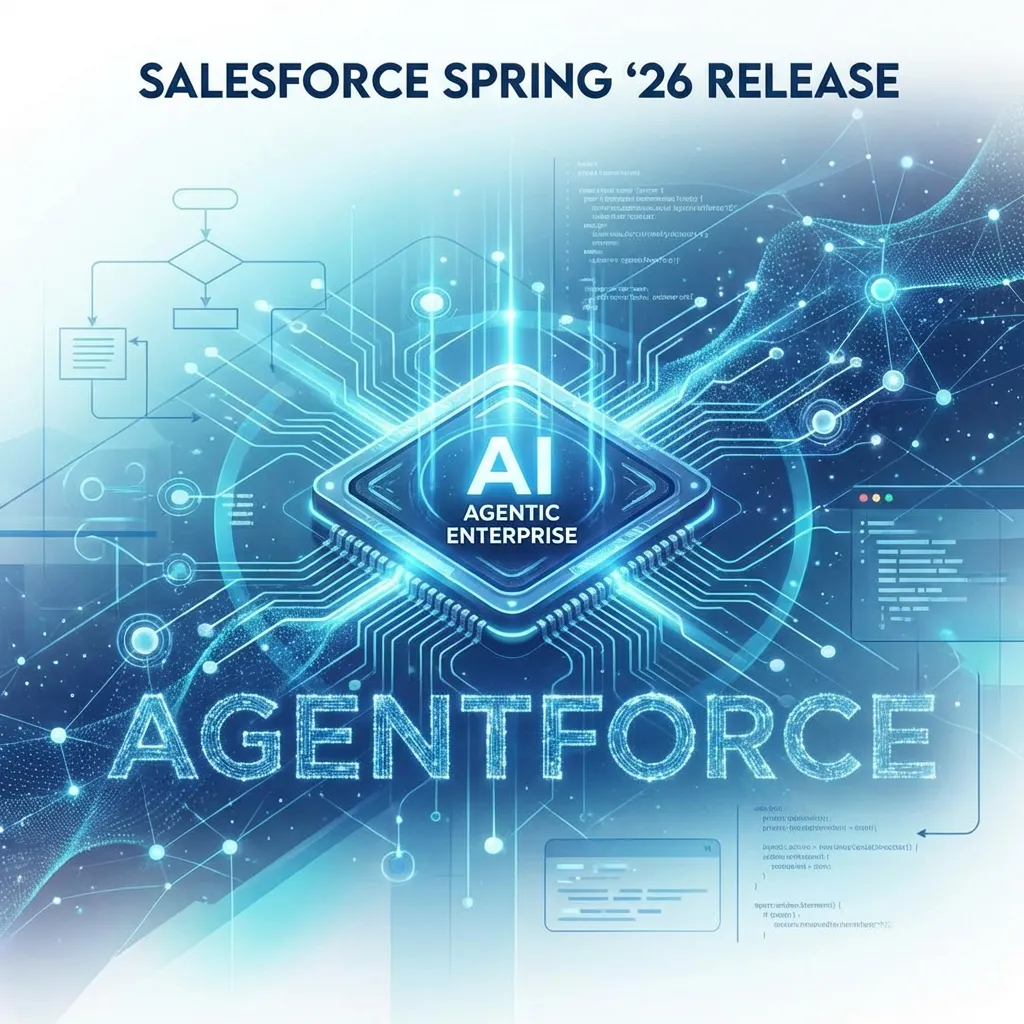
Dive deep into the Salesforce Spring '26 release with a seasoned CTA. Discover how Agentforce optimisations, AI-powered Flow drafts, and LWC enhancements are reshaping the platform.
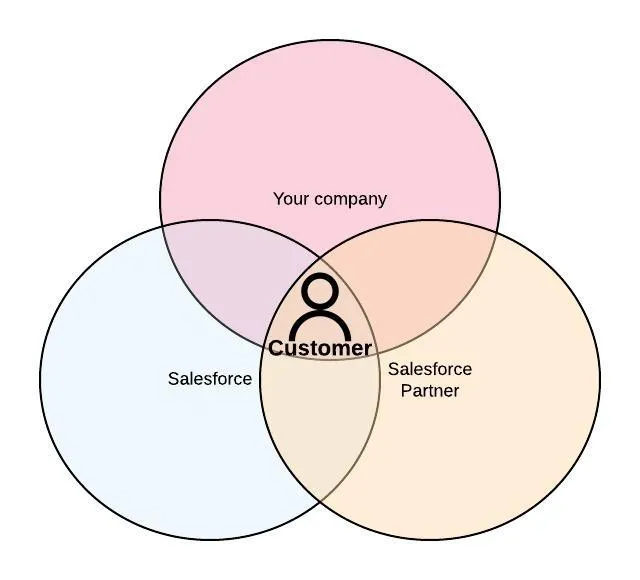
Selecting the right Salesforce partner is critical for success. Learn the new outcome-based partner tiers, core competencies, and the timeless models for successful delivery.
Salesforce's Free Suite looks like a generous entry-level play, but it masks a classic incumbent's dilemma. Discover why this 'Golden Cage' design often fails modern startups.
The AppExchange Security Review is the ultimate trust gatekeeper. Learn the phases of preparation, testing, and managing false positives to successfully list your Salesforce solution.
Sliick Forms v0.6.0. The complete admin guide: install and permission sets, the Admin Dashboard and its redesigned Delivery panel, drag-and-drop authoring with undo, visibility rules and the Logic Map, multi-page forms, sections and repeating groups, mapping fields to objects with the object model, record types and match keys, form settings and theme, publishing to your own public Sliick Edge address or Experience Cloud, versions and A/B experiments, save-and-continue, the responses console with dry-run previews and corrections, guest access, and blueprint-based ALM.
Sliick Forms is now on the AppExchange, free, at v0.3. It is a native Salesforce form engine with a drag-and-drop builder, conditional logic, multi-page forms, repeating groups, field mapping with match keys, versioned publishing, and a responses console that shows what a submission will write before it writes it. We are collecting feedback at support@sliick.com to decide what goes into 1.0.
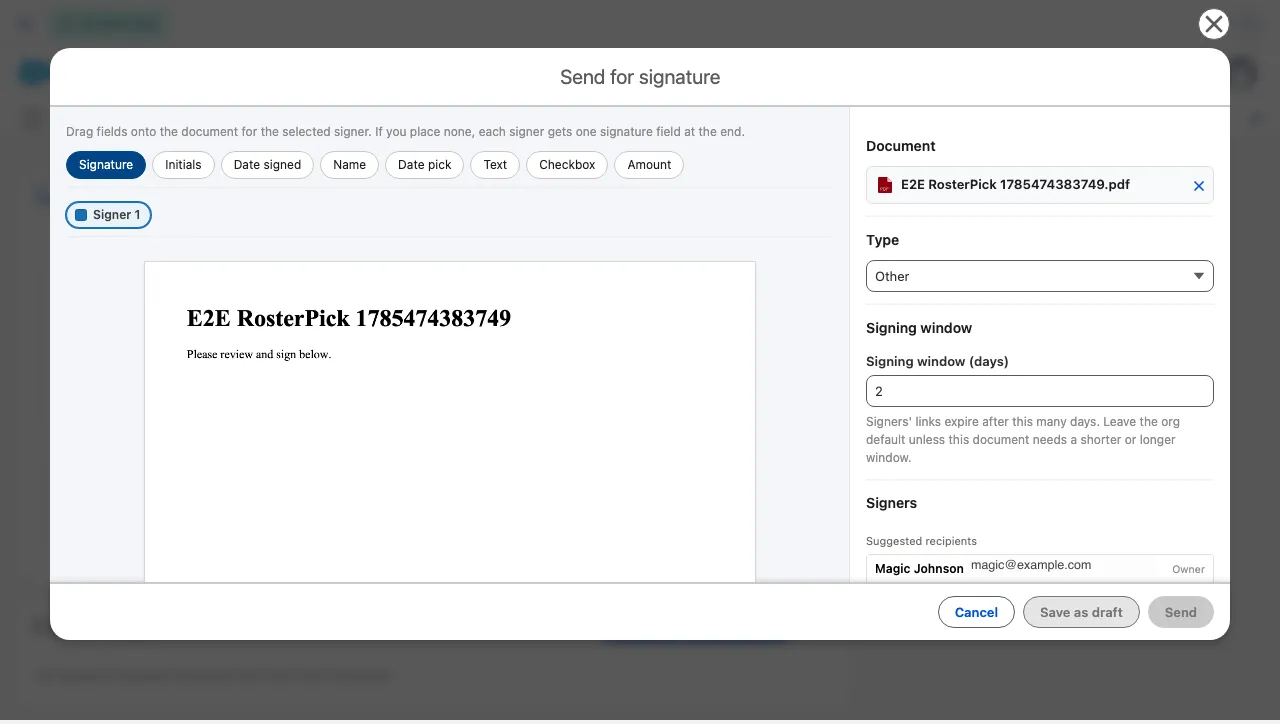
Everything you need to run e-signature in Sliick Docs, in one place: the one-time org setup, the settings worth setting before you send anything live, how a sender builds and tracks a signature request, what the signer experiences, and how a counterparty verifies a signed document afterwards.
Sliick Docs v2.6.0. The complete admin and end-user guide: install, theme, authoring with headers and footers, nested data, live preview, rich text, table-row repeats and merged cells, conditional content, running-user and date built-ins, record-file evidence packs, combining a record's own PDFs into one file, image merge fields, watermarks, barcodes and QR codes, Doc Bundles and Batches with a structured filter builder, list-view mass action, auto-email, Flow actions, Microsoft Word output, generation at scale, bring-your-own storage, native e-signature, compliance controls and audit log, retention, analytics, cross-org portability, and a localised interface.
Sliick Docs v2.6 is the biggest release since v2.0. Any PDF on a record can now be merged into a single document, new templates start from a gallery instead of a blank page, the editor shows you exactly what will print, signature integrity can be checked on demand, and batch targeting gets a proper filter builder.
Sliick Docs v2.5 is about the part of e-signature nobody enjoys: chasing. Reminders now go out on a schedule you set, signers are picked from the record rather than typed by hand, a completed envelope downloads as one file, and a signer who cannot open a document becomes visible to you on the record.
"How is this legal?" is the question I asked myself after my own solicitor sent me a document to sign with no digital certificate attached at all, on a perfectly reputable platform. Turns out that's how most e-signature actually works, and that realisation is the reason Sliick Docs' native e-signature is free. Six months and a lot of weekends later, there's a second half to the story: the cryptographic, Adobe-trusted green tick people keep asking for, which is real infrastructure with real running costs, and is exactly why it's a conversation rather than a checkbox.
Sliick Docs v2.4 is a trust release. Anyone holding a signed PDF can now confirm it is genuine on your public verification page, with no login and no Salesforce account. Signing emails gain a logo library, the Certificate of Completion records more of what happened, and signers see consent wording that fits where they are.
Sliick Docs v2.3 puts your organisation's branding on every signing email, redesigns the template editor for faster, clearer building, and hands you more control over the signing process itself: configurable expiry windows, duplicate and resend, in-person hosted signing, and one-click combined downloads of signed documents.
Sliick Docs v2.2 does not add a new pillar to the product - it makes the ones you already rely on more dependable. Your full generation history is always reachable, premium documents and images render reliably, signing invitations can carry a personal message, admins can write their own signing emails, and a new trusted digital seal option is available for signed documents.
Sliick Docs v2.1 is the biggest step the product has taken since v1.6. Embed every file on a record as a photo evidence pack, generate large image-heavy documents reliably at scale, keep generated output in your own cloud storage, and work in a fully localised interface. And one of the most-requested capabilities - native e-signature - is now open for a closed pilot.
A step-by-step setup guide for pointing Sliick Files at your own Azure Blob Storage account. Create the account and container, configure CORS, then wire up the Named Credential and Sliick Settings. About 20 minutes, browser-direct bytes, Salesforce stays the gatekeeper.
Point Sliick Files at your own Google Cloud Storage bucket in about 20 minutes. Bytes go browser-direct to GCS, Salesforce stays the gatekeeper, and the packaged Named Credential means there is no per-org URL editing.
Point Sliick Files at your own Amazon S3 bucket in about 15 minutes. Bytes go browser to bucket directly, Salesforce stays the gatekeeper, and you pay no Salesforce storage bill. Works with any S3-compatible provider.
Point Sliick Files at SharePoint Online via Microsoft Graph. This guide walks the full setup for both authentication modes - Service Principal (app-only) and Delegated (per-user) - from Entra app registration to connecting in Sliick Settings, then turning on two-way sync.
Reference for the public sliick.FilesApi surface. Bulk-first, provider-agnostic file operations from Apex, a System.Callable dynamic surface for soft dependencies, and six Flow actions. Bytes land in the org's configured storage provider.
Sliick Docs v1.6 lands two things at once: a round of editor craft that closes the most common authoring gaps (headers, merged cells, flexible columns, refreshed starters), and a portability engine that lets teams promote templates between orgs the same way they already promote code.
Sliick Docs v1.5 turns to what the documents themselves can do. A single template can now follow your data through every level of detail, you can see the finished result on the canvas while you build, and formatted rich-text fields finally flow straight into your PDFs and Word files.
Sliick Docs v1.4 focuses on making the editor easier to work in and the template library easier to organise. It redesigns the editor layout, simplifies finding and inserting merge fields, lets authors pull in related-list data without extra setup, adds find and replace, and introduces folders for the template library.
Sliick Docs v1.3 focuses on authoring efficiency and compliance controls. It adds new merge fields and built-in tokens that remove repetitive manual work, three template-level controls over who can see and generate each document, image watermarks, an admin setup checklist, and a more scalable template format.
Sliick Docs v1.2 is the first major step up from v1.0. The same templates now generate either a PDF or a Microsoft Word document. End users can bulk-generate from a list view in one click. Admins get a compliance audit log, retention windows, and an analytics dashboard. And six ready-to-import starter templates ship with the release.
Sliick Docs v1.0 ships the upgrades that took the app from a clean MVP into a production-grade document platform: a theme system and inline formatting toolbar, image merge fields, hyperlinks, watermarks, 5-hop parent lookups, aggregate functions, bulk generation, multi-template bundles, auto-email, three Flow actions, and template portability.
Master Sliick Photos v2.2.0. This guide covers everything from admin-level storage configuration (S3, GCP, Azure, SharePoint) to end-user features like bulk uploads and photo editing.
Learn how to visualize your Salesforce data with 100% native, zero-dependency SVG charts. This comprehensive guide covers setup, configuration, and developer integration.
Follow the studio's writing on native Salesforce architecture, product, and the platform's quieter edges.
Subscribe via RSS